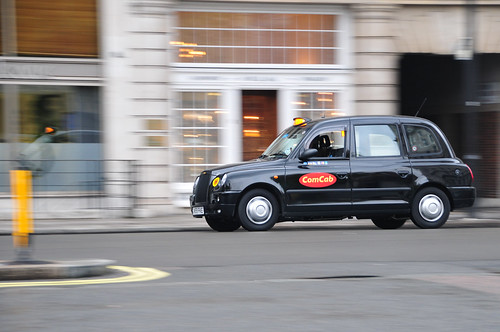
Solid State FTW - Part 1: Mac Pro (Early 2008)

Vroom
Vroom!
Recently I have added SSDs to things around me. That is, at least to two things. My laptop and my trusty old Mac Pro. Both experiences were fairly hitchfree, but I would like to point out one or two things. First one out was my Mac Pro.

I decided to add a 256 GB SSD drive and went for a OCZ SSD Vertex 4 Series 256 Gb 2.5" SATA III drive with a Pro Sled 2.5" SSD/HDD. This fit snuggly in the 4th HD bay of my machine. I also wanted to take advantage of this commotion for doing a clean install of the newfangled Mountain Lion. (After making sure using good old googling that Cubase and Lightroom would still work.) I bought the upgrade in the AppStore, downloaded the installer, and followed this guide to get it onto a USB-stick: http://www.macworld.com/article/1161069/make_a_bootable_lion_installer.html . Reboot holding down the alt-key, chose to boot from USB and got a clean OSX in zero point swish. Since I still have my old HDs in there somewhere, and some bigger, not as often accessed files can stay on the old-fashioned platters, I symlinked some folders to my user's folder. One of them is Dropbox. (I might just change this in the future, but for now this seems to suit me just fine.) The plan is to keep the OS and programs on the SSD and photos etc elsewhere. I keep the huge Lightroom library file - with previews - on the SSD for quick start of the program, though.

It really _is_ like having a new computer. Everything is just super snappy. My Novabench drive write speed scores went from 52 MB/s to 164 MB/s. Most excellent.

Some additional tips/tools/references:

Comments

Popular posts from this blog

Using a Raspberry Pi as a MIDI USB/5-pin bridge

In my constant... need... to get everything music instrument related to communicate with each other, I wanted to look into ways to get some of my keyboards/synths with only MIDI over USB to talk to devices with regular good old-fashioned 5-pin MIDI ports from the eighties. Cables! First I had a quick look at off the shelf solutions. The most interesting one being the Kenton MIDI USB Host – providing MIDI host functionality for USB devices as well as regular MIDI in and out in a small box. Unfortunately it is rather expensive (~125 €) and a reliable online source warned me that it was not entirely stable in collaboration with my OP-1, so I started thinking of more... home-grown solutions. I decided to try to use my old Raspberry Pi and see if that would serve as a USB host with a borrowed MIDI USB adapter. (Thanks Simon.) A cheaper, and, as an added boon, a nerdier solution. Step 1: Get the USB MIDI device up and running This was the easy part. The device I have been lent ...

Fix your rapid blinking Marantz SR-6004 using nothing but 3 fingers - and a thumb

A couple of years ago my (most of the time excellent) Maranz SR6004 acted up. It did't want to turn itself on. Properly. Just stood there and blinked rapidly. Its little red light that is. At me. The solution was so simple that I didn't bother to write it down as I was sure to remember it. Alas, no. Some weeks ago it did it again. (Can it be the heat?) Just stood there blinking rapidly at me. The manual just said - as it said last time around - that it was time to return the unit to it's maker. Or similar. Some googling led me to this page:  http://www.allquests.com/question/4056803/Marantz-XXX4-Series-Failure-Issues.html  The technical term for what I had experienced seems to be "The Pop of Death". Aïe. But!, humongous letters said: YOU CAN SOMETIMES RESET THE UNIT BY PRESSING SURR MODE, CLEAR AND EXIT SIMULTANEOUSLY And so I did. And so it was fixed. And all was well. (And now I have written it down for the next time.)

Add overall lesson timing to video listings on Coursera

Marché de La Rochelle HDR  Probably about two years ago - when taking Andrew Ng's excellent "Machine Learning" MOOC, Johannes sent me a piece of JavaScript that populated the video lists with overall time per lesson just by pasting it into the URL-thingy in Chrome. Magic. Today when I sat down to start the course on "General Game Playing" that I have signed up for, but, alas, not (yet) found much time for, I thought of that piece of code and wondered if I, with my new knowledge of JavaScript, could whip up something like that. (Also I couldn't find Johannes' original one.) I quickly hacked together something this afternoon over a flat white in a hipster cafe here in Lyon. And lo and behold it worked. Then I extended the functionality to also show minutes and seconds of unwatched video - as well as total overall counters for the entire course. Now each lesson heading reads "Lesson N - Name [time remaining/total time]" instead of just ...